
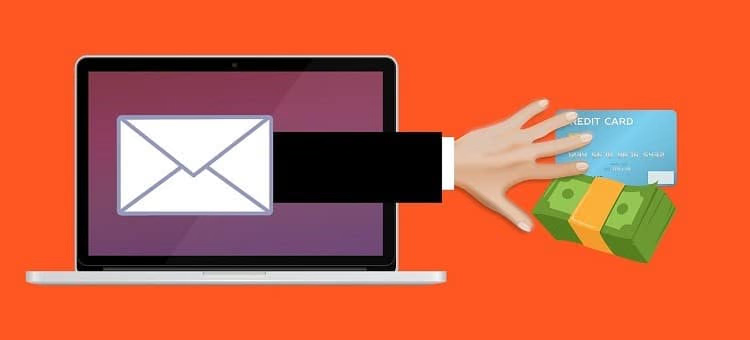


A phishing attack involves social engineering where the attackers dupe people to steal confidential data. The hostiles mainly aim for credit card details and login credentials.
In this type of cyber-attack, the enemies pretend to be a trusted body. They mislead victims to open an email or text message that carries malware.
As soon as the recipient clicks the malicious link, the installation of malware starts. It may cause a system block due to a ransomware attack and the breach of sensitive information.
Data, whether personal or organizational, is always valuable. Hackers can use it to access an organization’s network or commit fraud. In addition, sometimes phishing scams target organizational data to support the spying actions of opposition companies.
A cyber-attack can result in disaster for both individuals and organizations. Personal attack aims to steal funds, unauthorized purchases, or identity theft.
An organization encountering a phishing attack generally experiences severe financial losses. In addition, there may be a decline in market share, reputation, and consumer trust.
A phishing attempt may extend to a security issue. It can cause too complex a situation for a business to survive. Organizations can opt for help desk services to combat such incidents. Many IT help desk outsourcing companies offer security services that help identify threats and prevent them on time.
Moreover, phishing often comes as a preface to a larger attack in corporate or governmental networks. In the latter scenario, the intruders get unauthorized access to the network and remain undetected for a longer period. They may distribute malware through the entire system or acquire access to secured data. This article describes everything about phishing attacks and how to prevent them.
Different Kinds of Phishing Attacks
Cybercrime takes off with extensive use of social media. Identity theft is rising as people put their personal information in their profile databases. Software tools are designed to prevent cyber threats and avoid data breaches.
The leading software companies listed above offer different types of cybersecurity tools. They have free as well as premium and paid features. Depending on the cyber-attack a company can face, it can select one or more software tools that meet its security requirements.
IT services can be handled either internally by the company or outsourced. Companies providing cybersecurity offer 24/7 help desk outsourcing services to their clients to give them instant assistance.
1. Spear Fishing
Cybercrime takes off with extensive use of social media. Identity theft is rising as people put their personal information in their profile databases. Software tools are designed to prevent cyber threats and avoid data breaches.
The leading software companies listed above offer different types of cybersecurity tools. They have free as well as premium and paid features. Depending on the cyber-attack a company can face, it can select one or more software tools that meet its security requirements.
IT services can be handled either internally by the company or outsourced. Companies providing cybersecurity offer 24/7 help desk outsourcing services to their clients to give them instant assistance.
2. Clone Phishing
Cybercrime takes off with extensive use of social media. Identity theft is rising as people put their personal information in their profile databases. Software tools are designed to prevent cyber threats and avoid data breaches.
The leading software companies listed above offer different types of cybersecurity tools. They have free as well as premium and paid features. Depending on the cyber-attack a company can face, it can select one or more software tools that meet its security requirements.
IT services can be handled either internally by the company or outsourced. Companies providing cybersecurity offer 24/7 help desk outsourcing services to their clients to give them instant assistance.
3. Whaling
Cybercrime takes off with extensive use of social media. Identity theft is rising as people put their personal information in their profile databases. Software tools are designed to prevent cyber threats and avoid data breaches.
The leading software companies listed above offer different types of cybersecurity tools. They have free as well as premium and paid features. Depending on the cyber-attack a company can face, it can select one or more software tools that meet its security requirements.
IT services can be handled either internally by the company or outsourced. Companies providing cybersecurity offer 24/7 help desk outsourcing services to their clients to give them instant assistance.
How to Prevent Phishing Attacks?
Cybercrime takes off with extensive use of social media. Identity theft is rising as people put their personal information in their profile databases. Software tools are designed to prevent cyber threats and avoid data breaches.
The leading software companies listed above offer different types of cybersecurity tools. They have free as well as premium and paid features. Depending on the cyber-attack a company can face, it can select one or more software tools that meet its security requirements.
IT services can be handled either internally by the company or outsourced. Companies providing cybersecurity offer 24/7 help desk outsourcing services to their clients to give them instant assistance.
1. Learn the Nature of Phishing Attacks
Hackers develop new methods of attack every day. But their weak point is that they include a common stage in all their tricks. And this common nature can help us identify a phishing scam.
So it is not very difficult to sense a phishing scam if we know the area of suspicion. You can take help from the sites that tell about new phishing attacks and their identifying factors. If you keep yourself informed early, you can enhance the security awareness of your users on time. It will help you prevent a potential attack.
2. Don’t Click on Unfamiliar Links
It is wise not to click on any link in an email or message, even if you receive it from a known sender. The sender might have forwarded the message to you without knowing about it. You can try to detect the destination by exploring it on the search engine.
However, in a sophisticated phishing scam, the URL may look like that of a genuine site. Hackers design these links to take you to a destination where they steal login or credit card details.
3. Install Free Anti-Phishing Add-ons
Cyber security has become a crucial concern in every online activity. So most browsers come with advanced security benefits. They offer free add-ons that send an alert whenever you attempt to open a malicious website. You can install these security enhancers on all devices to prevent phishing attacks.
4. Opt for a Data Security Platform to Detect Indications of an Attack
If you become a victim of a phishing scam, you may face financial or other kinds of loss. So, it is crucial to detect and prevent such attacks on time.
A data security platform sends an automatic alert whenever there is a suspicious user or unusual changes in data. This platform can identify unauthorized access to the network and warn you before any damage occurs.
5. Update Passwords Regularly
If you become a victim of a phishing scam, you may face financial or other kinds of loss. So, it is crucial to detect and prevent such attacks on time.
A data security platform sends an automatic alert whenever there is a suspicious user or unusual changes in data. This platform can identify unauthorized access to the network and warn you before any damage occurs.
6. Don’t Overlook the Available Updates
We often ignore the system or software update messages. However, these updates can keep your network and devices safe against new cyber threats. A help desk outsourcing might be the best option in this matter. They can perform regular updating activities without failure.
7. Install Firewalls
Firewalls act as a shield between your devices and a hacker. If you use desktop and network firewalls together, it will strengthen your security system.
Conclusion:
Firewalls act as a shield between your devices and a hacker. If you use desktop and network firewalls together, it will strengthen your security system.
Frequently Asked Questions
Firewalls act as a shield between your devices and a hacker. If you use desktop and network firewalls together, it will strengthen your security system.